Imagine you're choosing between two local dentists. One has 47 reviews and a 4.3-star average. The other has 312 reviews and a perfect 5.0. Your instinct says go with the higher-rated option — but what if over half of those glowing testimonials were written by people who never sat in that dentist's chair? Welcome to the murky world of manufactured trust, where fake reviews distort competitive landscapes, mislead consumers, and punish honest businesses that play by the rules.
The fake review economy is booming. And if you're a business owner competing on the strength of your reputation, understanding how fabricated feedback works — and how to see through it — isn't optional anymore. It's survival.
The Scale of the Fake Review Problem
Fake reviews aren't a fringe issue. They're an industry unto themselves.
According to a 2023 report from the World Economic Forum, an estimated $152 billion in global spending is influenced by fake reviews each year. The Federal Trade Commission (FTC) has ramped up enforcement, finalizing a rule in 2024 that explicitly bans fake reviews and imposes penalties of up to $50,000 per violation. Meanwhile, research from the University of Baltimore estimated that fake reviews cost U.S. businesses roughly $152 billion annually in distorted consumer spending.
Here's what the landscape looks like in numbers:
- 30-40% of online reviews are estimated to be fake or incentivized, according to research cited by the Washington Post
- Yelp's automated recommendation software filters roughly 25% of submitted reviews as unreliable (Yelp Trust & Safety Report)
- Google removed over 170 million fake reviews in 2023 alone (Google Transparency Report)
- A Harvard Business School study found that a one-star increase on Yelp leads to a 5-9% increase in revenue for independent restaurants — making the financial incentive to cheat enormous
The problem isn't just that fake reviews exist. It's that they've become sophisticated enough to fool most consumers — and even some automated detection systems.
How Fake Reviews Are Manufactured
Understanding fake reviews starts with understanding the ecosystem that produces them. There are several distinct types, each with different tells and different levels of sophistication.
1. Paid Review Farms
Organized operations — often based overseas — where workers are paid small amounts to write reviews for businesses they've never patronized. These operations scale quickly, sometimes generating hundreds of reviews per week for a single client.
Common characteristics: - Generic language that could apply to almost any business - Clusters of reviews posted within a short time window - Reviewer profiles with reviews spanning unrelated industries and geographies - Unusually high percentage of 5-star ratings with minimal text
2. Incentivized and Invited Reviews
This is the gray area that trips up many well-meaning business owners. Offering discounts, freebies, or entry into a raffle in exchange for a review violates both Google's and Yelp's terms of service. Even "review gating" — selectively asking happy customers to leave reviews while directing unhappy ones to a private feedback form — creates a distorted picture.
The result: A review profile that looks artificially positive, with sentiment that doesn't match the actual customer experience.
3. Competitor Sabotage
The flip side of fake positive reviews is fake negative reviews planted by competitors. A 2021 study published in the Journal of Marketing found that businesses in highly competitive local markets are significantly more likely to receive suspicious one-star reviews with no substantive text.
4. AI-Generated Reviews
With the rise of large language models, generating human-sounding review text has become trivially easy. A 2024 Cornell University study found that consumers could only identify AI-generated reviews 50% of the time — essentially no better than a coin flip. These reviews often sound polished and specific enough to evade basic detection.
Why Fake Reviews Hurt Honest Businesses
If you're running a legitimate business and earning your reviews the hard way, the fake review economy works against you in multiple ways:
- Unfair ranking advantages: Google's local search algorithm factors in review volume and average rating. Businesses with inflated review profiles can outrank you in local pack results, even if your actual service quality is superior.
- Eroded consumer trust: When consumers eventually discover that a highly-rated business doesn't deliver, they become skeptical of all reviews — including your authentic ones.
- Distorted competitive benchmarks: If you're benchmarking your performance against competitors whose review profiles are artificially inflated, you're making strategic decisions based on fiction.
- Pricing pressure: Businesses with fake 5-star profiles can charge premium prices, forcing honest competitors to either match inflated perceptions or compete on price they can't sustain.
The irony is painful: the businesses most harmed by fake reviews are often the ones doing the best actual work.
Trust Signals That Fake Reviews Can't Replicate
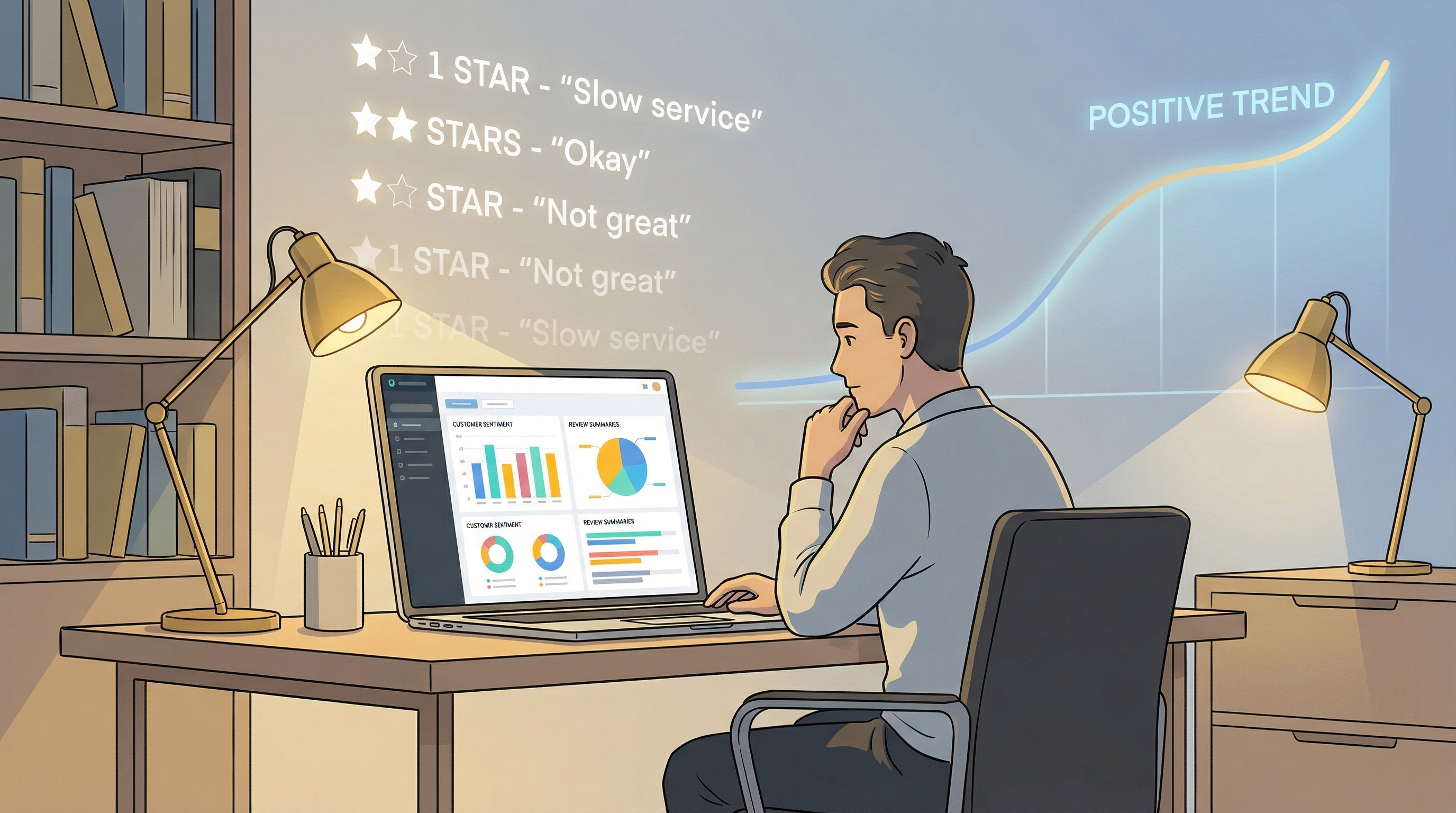
Here's the good news. While fake reviews can mimic star ratings and surface-level positivity, they consistently fail to replicate the patterns found in authentic customer feedback. When you analyze reviews at scale using AI-driven sentiment and thematic analysis, the differences become stark.
Thematic Depth and Specificity
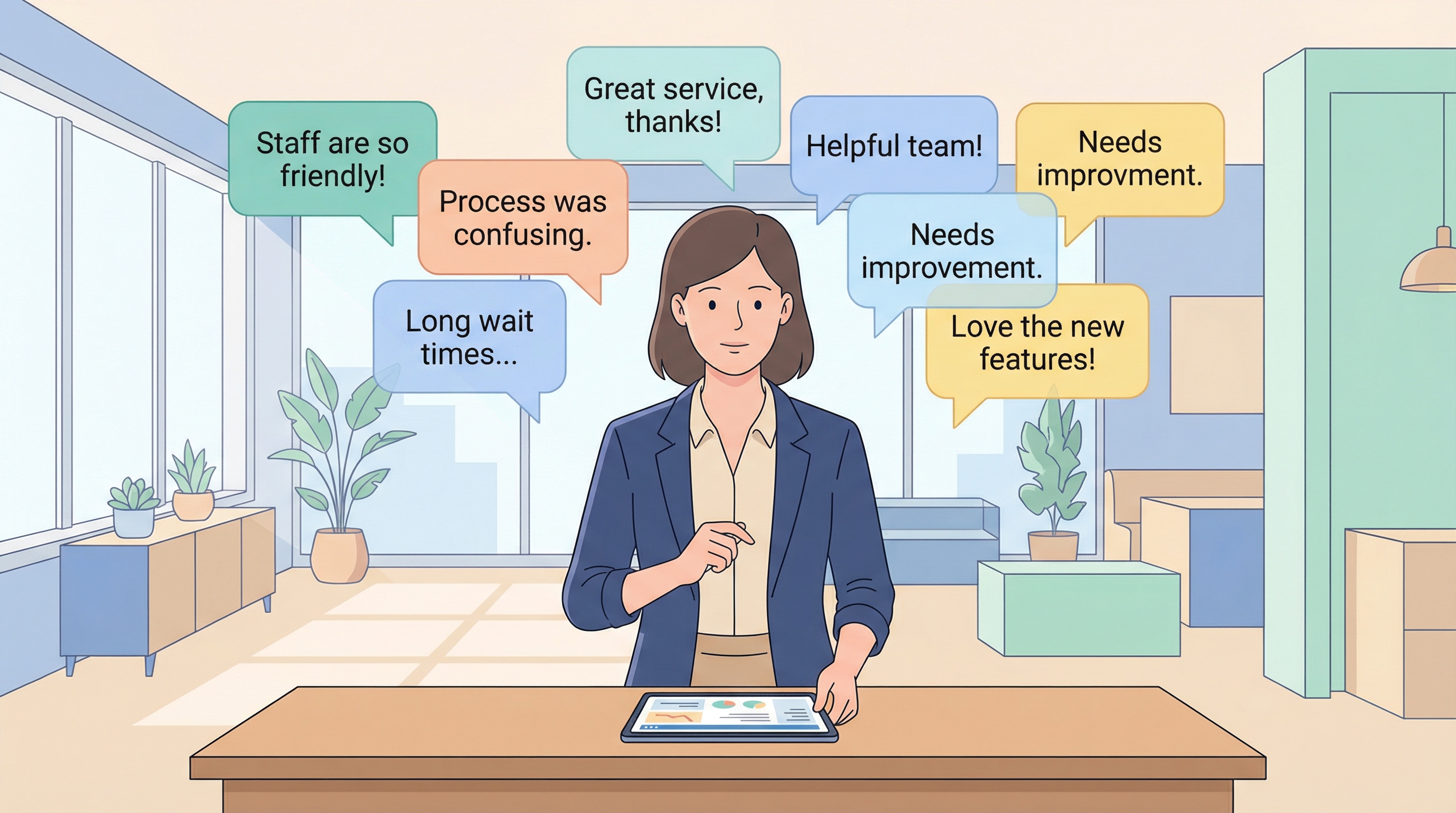
Authentic reviews mention specific details: a server's name, a particular dish, the wait time on a Tuesday afternoon, the smell of the waiting room. Fake reviews tend toward vague superlatives — "Great service! Highly recommend!" — because the writer has no actual experience to draw from.
When AI analyzes hundreds of reviews thematically, authentic review profiles show rich, diverse topic clusters — everything from parking to pricing to specific product features. Fake-heavy profiles show thin thematic variety with repetitive language patterns.
Sentiment Distribution Patterns
No real business has 100% positive sentiment. Authentic review profiles show a natural distribution: mostly positive, some neutral observations, and occasional complaints. Research from Northwestern University's Spiegel Research Center found that purchase likelihood actually peaks at ratings between 4.2 and 4.5 — not 5.0 — because consumers instinctively distrust perfection.
A sentiment analysis that breaks reviews into positive, neutral, and negative percentages can immediately flag profiles that seem unnaturally skewed.
Customer Journey Consistency
Real customers describe a journey: how they found the business, what the experience was like, and what happened after. When you analyze reviews by customer journey stage — pre-purchase, during the experience, and post-purchase — authentic profiles show feedback distributed across all stages. Fake review profiles tend to cluster exclusively around the experience stage with no mention of discovery, follow-up, or repeat visits.
Temporal Patterns
Authentic reviews accumulate gradually, with natural spikes after busy seasons, local events, or marketing campaigns. Suspicious profiles show sudden bursts — 30 five-star reviews in a week from a business that normally gets 3-4 per month — followed by long quiet periods.
Monthly trend analysis makes these anomalies immediately visible.
How to Protect Your Business
Whether you're concerned about competitors gaming the system or want to ensure your own review profile communicates authentic trust, here are concrete steps:
For Your Own Reviews
- Never incentivize reviews — no discounts, no raffles, no gift cards in exchange for feedback
- Ask all customers for feedback equally — avoid review gating that only funnels happy customers to public platforms
- Respond to reviews consistently — both positive and negative responses signal authenticity and engagement
- Focus on service quality — the most sustainable review strategy is simply delivering an experience worth talking about
- Monitor your review profile's health — understand your sentiment distribution, thematic patterns, and how you compare to industry benchmarks
For Evaluating Competitors
- Look beyond star ratings — a 4.8 with thin, generic reviews is less trustworthy than a 4.3 with detailed, specific feedback
- Check reviewer profiles — reviewers with only one review, or reviews spanning wildly different cities, are red flags
- Note timing patterns — sudden review surges without an obvious business reason warrant skepticism
- Read the actual text — thematic depth and specificity are nearly impossible to fake at scale
The Role of AI in Separating Signal from Noise
The sheer volume of review data makes manual analysis impractical for most business owners. Reading through 200+ reviews, identifying patterns, tracking sentiment shifts over time, and comparing your profile against industry benchmarks is a full-time job.
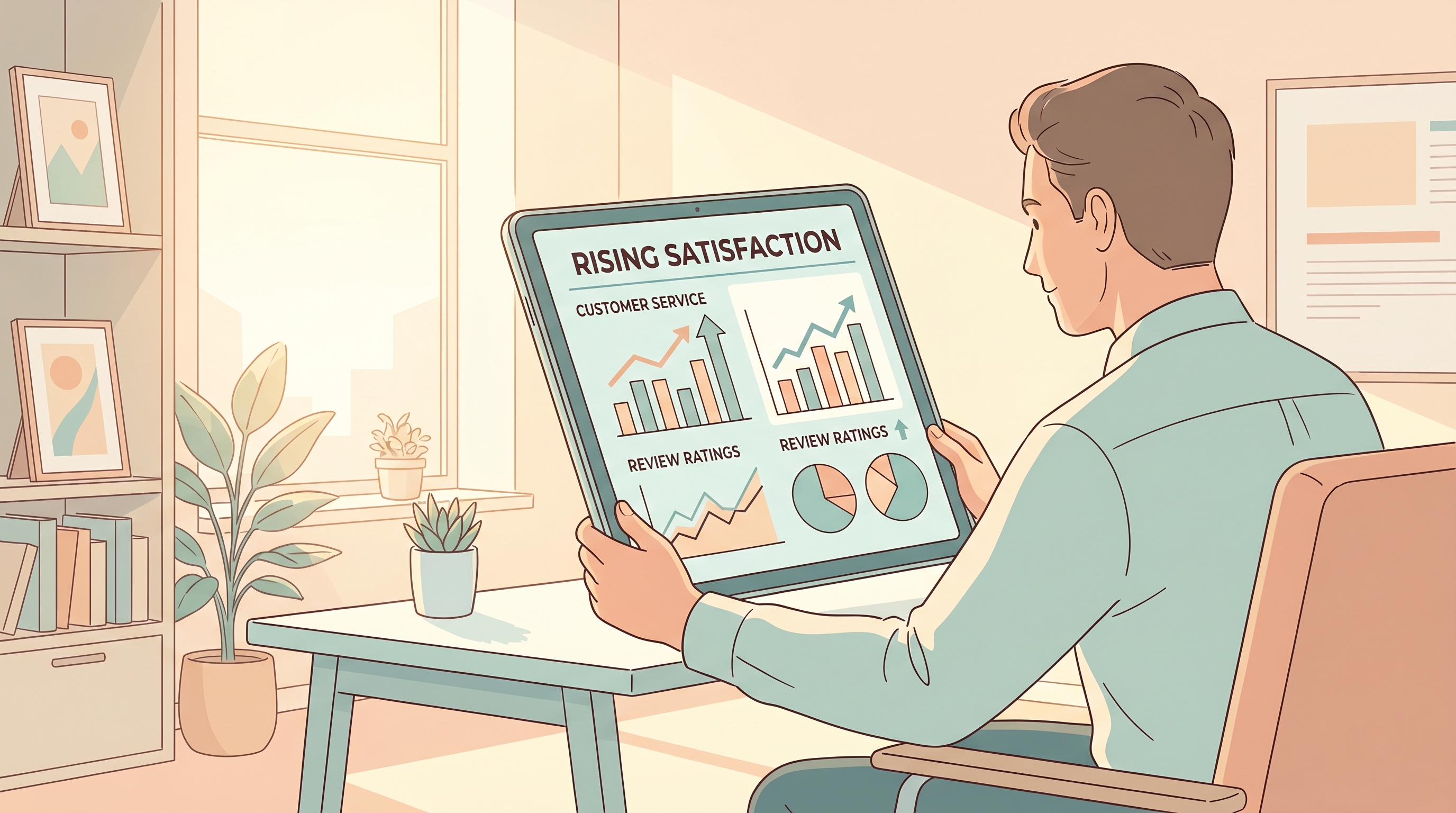
This is where AI-driven analysis becomes invaluable — not as a fake review detector per se, but as a tool that surfaces the patterns and trust signals that define authentic customer feedback. When you can see your sentiment breakdown, thematic clusters, customer journey distribution, and monthly trends laid out clearly, you gain an honest picture of what your customers actually think — and how that compares to the competitive landscape.
Getting an Honest Picture of Your Reviews
If you're ready to understand what your authentic reviews actually say about your business, Zabble Insights can help. Our AI-powered platform analyzes your Google Reviews (and optionally Yelp Reviews) to deliver a comprehensive professional report covering sentiment analysis, thematic breakdowns, customer journey insights, monthly rating trends, and strategic recommendations — all benchmarked against data from over 6,600 businesses and nearly 4 million reviews across 22 industry categories.
Each report is a detailed snapshot of your review profile as it stands today: what's working, what needs attention, and where the real opportunities lie. No guesswork, no vanity metrics — just actionable insights drawn from what your actual customers are saying.
Explore sample reports and see how your business stacks up at zabbleinsights.com.
Frequently Asked Questions
How common are fake reviews on Google and Yelp?
Estimates vary, but research suggests that 30-40% of online reviews may be fake or incentivized. Google removed over 170 million fake reviews in 2023, while Yelp filters approximately 25% of submitted reviews as unreliable. The problem is widespread across virtually every industry, though it tends to be most acute in highly competitive local service categories like restaurants, home services, and healthcare.
Can consumers tell the difference between real and fake reviews?
Generally, no — at least not reliably. A 2024 Cornell University study found that consumers could identify AI-generated fake reviews only about 50% of the time, which is no better than random chance. However, patterns become much more visible when reviews are analyzed at scale. Thematic depth, sentiment distribution, temporal patterns, and customer journey consistency are all trust signals that distinguish authentic review profiles from manufactured ones.
Is it illegal to buy fake reviews?
Increasingly, yes. The FTC finalized a rule in 2024 that explicitly prohibits fake reviews, with penalties of up to $50,000 per violation. Beyond federal enforcement, platforms like Google and Yelp actively remove fake reviews and may penalize or suspend business listings found to be engaging in review manipulation. Even incentivized reviews — offering discounts or gifts in exchange for feedback — violate both platforms' terms of service.
How can I tell if a competitor is using fake reviews?
Look for these red flags: sudden bursts of reviews in a short time window, unusually high percentages of 5-star ratings, generic language that lacks specific details about the actual business experience, and reviewer profiles that have only one review or span multiple unrelated cities. AI-powered sentiment and thematic analysis can also reveal patterns — such as thin thematic variety or unnatural sentiment distributions — that are difficult to spot when reading reviews individually but become obvious when analyzed at scale.